Does Customer Support Matter After Product-Market Fit?

Dawson Chen
When you have 100 users, customer support is obviously worth your time. Every user is precious. You treat each one like a B2B contract. You respond personally, solve their problems fast, and hope they become super-referrers, like the first 100 Airbnb users who brought the platform to life.
This is well understood. The question gets harder at scale.
The 10,000-User Problem
At 10,000 users, the math seems to work against you. You can't personally respond to every ticket. Hiring and training support agents takes months. The cost of maintaining a team grows linearly with volume. And for many B2C companies, the revenue per user is low enough that spending $15 per ticket on support starts to eat into margins.
So most companies let quality slide. Response times get longer. Answers get more templated. The founder moves on to other things. Support becomes a cost center to minimize.
This was rational behavior under the old constraints. But those constraints have changed.
AI Changes the Equation
Training a human support agent used to take weeks or months. You'd write a knowledge base, review their drafts, give feedback, and slowly ramp them up. Even then, they'd plateau at maybe 70-80% of the quality the founder could deliver. (We went through this exact process at our last startup, and wrote about it here.)
AI agents skip this ramp entirely. You connect your data sources, your payment system, your knowledge base, and the agent starts drafting replies on the first ticket. The quality starts high and gets better over time.
The economics of great support at scale have changed. The cost per ticket drops. The quality stays high. And a single person can oversee thousands of interactions.
What Happens When Every User Gets Founder-Grade Support
Three concrete things change when your support quality stays high at scale:
1. Your virality coefficient increases
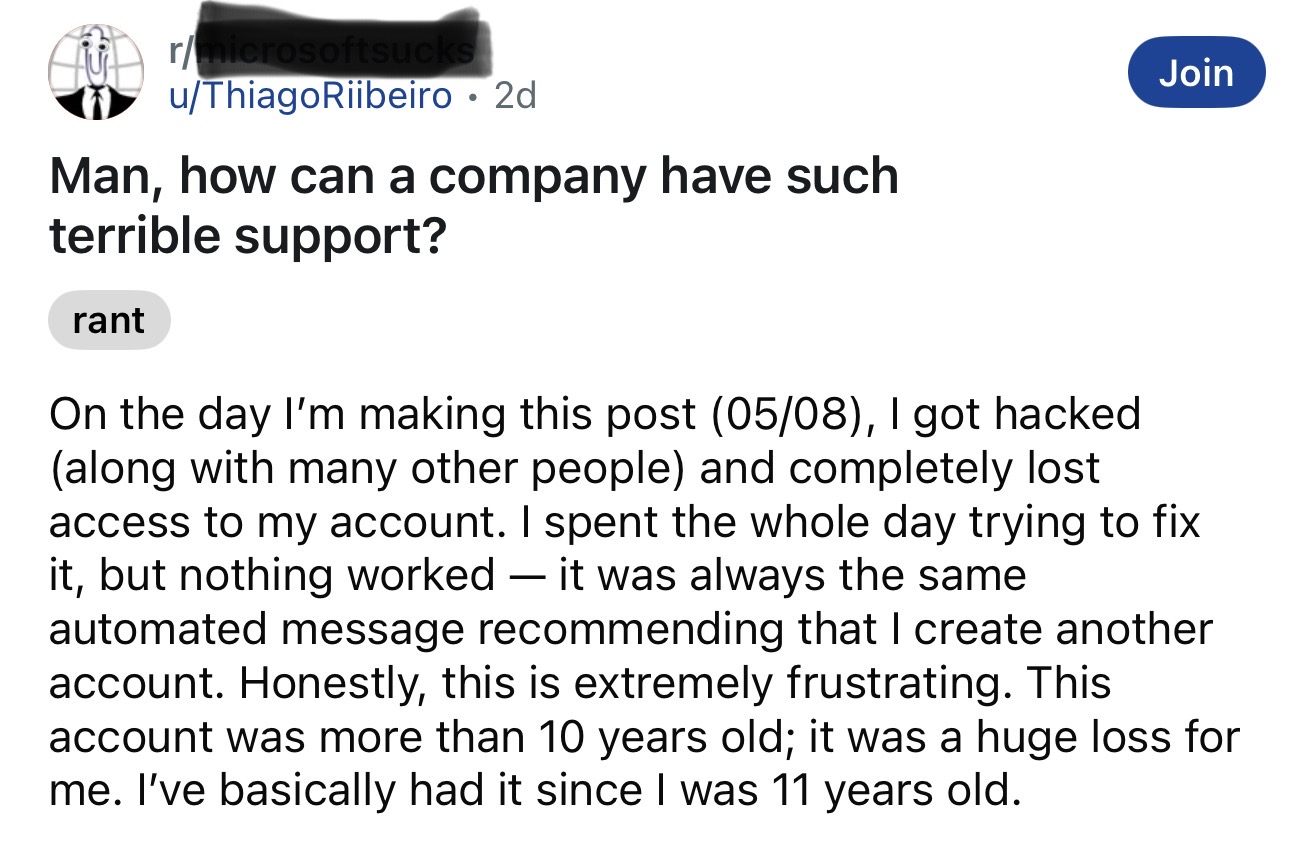
The most common negative review for any B2C product is some version of "this company's customer support sucks." More 5-star ratings and fewer scathing reviews mean more people convert. Word of mouth compounds.
2. Your churn decreases
A significant portion of users who churn are unhappy customers who never got their issue resolved, or waited too long for a response. Instant, accurate support catches these users before they leave.
3. You stand out from the competition
The biggest company in your industry almost certainly has terrible support. It's one of the few areas where a smaller company can consistently outperform a larger one. Great support is a real competitive moat, especially in crowded B2C markets.
The 15-Minute Version
This used to require months of hiring, training, and process-building. Now it takes 15 minutes.
At Letterbook, you connect your inbox, your database, and Stripe. The AI agent drafts replies that sound like a founder wrote them: concise, accurate, and grounded in your actual customer data. Every reply gets human approval before it goes out.
The companies winning on support in 2026 realized the cost of great support dropped to nearly zero.